
The Complete Guide to Your Free Walking Tour in Lhasa
Lhasa serves as the spiritual heart and cultural center for all of Tibet today. The ancient city offers many historic sights for curious travelers to explore in 2026. You should join a free walking tour in Lhasa to see these amazing places yourself. This guide helps you plan your 2026 trip with expert advice and local tips.
Walking through the winding alleys allows you to see the real life of local residents. You will witness the daily rituals of pilgrims who travel from very far away. These tours provide a deep connection to the history of the Tibetan plateau. It is an experience that stays with you long after you return home.
Many people find that walking is the most respectful way to visit holy sites. You can move at your own pace and soak in the unique atmosphere. The city is full of hidden gems that large tour buses always miss. Prepare yourself for a journey through time in the streets of old Lhasa.
Key Takeaways
- Join a walking tour to see authentic local life up close.
- Always walk clockwise around temples to respect Tibetan Buddhist traditions.
- Protect yourself from the strong high altitude sun with hats and sunscreen.
Why Take a Free Walking Tour in Lhasa?
To plan your trip, review Tibet Museum.
You can find the latest updates on Lonely Planet Lhasa Guide.
Walking tours provide a slow pace for visitors to enjoy every small detail. You can see the intricate carvings on old wooden doors along the narrow streets. Local guides share unique stories that you will never find in standard history books. It is a wonderful way to connect with the living culture of the city.Many travelers prefer walking over taking a taxi through the busy city center. You get to breathe the fresh mountain air while moving between the historic sites. Meeting other travelers from around the world is also a huge benefit of these tours. You can find many free things to do in Lhasa quite easily.
The city center is very walkable for most people who visit the region. Most major landmarks are located close to each other in the Old Town. You will feel the vibrant energy of the local pilgrims as you walk. This personal experience is truly unique for every visitor who comes here.
Guides often work for tips on these tours to ensure high quality service. This system encourages them to give the most interesting and helpful information possible. You can ask many questions about local life and modern Tibetan culture. It remains the most authentic way to explore this high altitude capital.
- Top Benefits of Walking Tours
- Cost: Based on tips
- Pace: Slow and steady
- Style: Authentic local life
- Benefit: Expert guide stories
Best Route for Your Lhasa Walking Tour
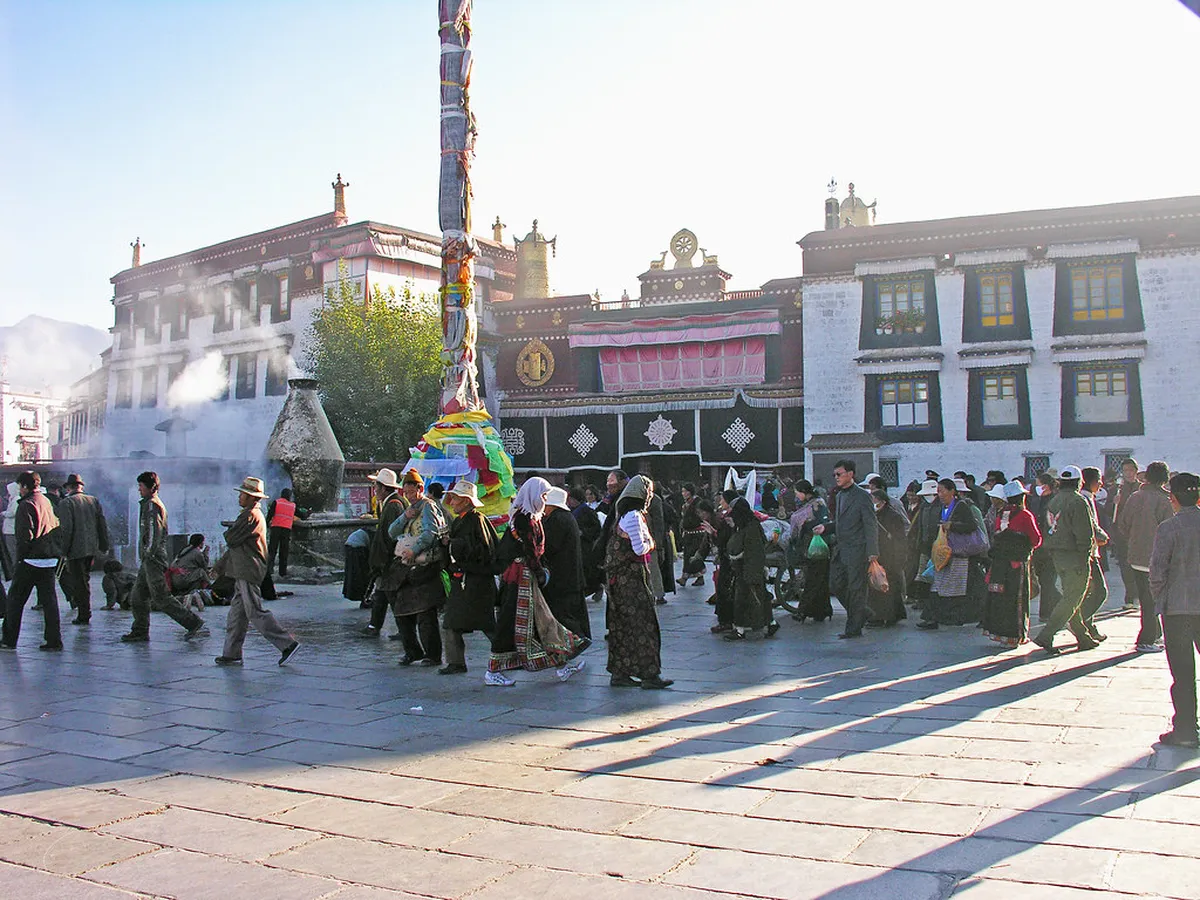
The Barkhor Street circuit is the most famous walking path for pilgrims in the city. You will see thousands of people walking clockwise around the holy Jokhang Temple. This path is the best place to observe the deep devotion of the people. Our Lhasa walking route map shows you exactly where to go for this experience.
Start your walk at the main square in front of the Jokhang Temple. Follow the flow of the crowd as they move through the ancient market streets. You will pass by many traditional shops selling incense and colorful prayer flags. The smell of burning juniper fills the air throughout this entire walking route.
Turn into the smaller side alleys to see how local families live today. These quiet paths lead to hidden courtyards and small neighborhood shrines. You might see elderly residents spinning prayer wheels while sitting on their doorsteps. These moments offer a glimpse into the peaceful side of life in Tibet.
Continue your journey toward the Tromzikhang Market for a more energetic local experience. This market is where residents buy their daily food and household supplies. It is a great place to see the variety of local Tibetan products. The route eventually leads back to the main Barkhor circuit for a complete loop.
- Key Stops on the Route
- Start: Jokhang Square
- Path: Barkhor Circuit
- Market: Tromzikhang Area
- Finish: Barkhor Circuit loop
Top Landmarks to See in Lhasa Old Town
The Jokhang Temple stands as the most important religious site in all of Tibet. You can admire the golden roof and the ancient stone walls from the outside. Many pilgrims prostrate themselves in front of the main entrance as a sign of faith. This is one of the top landmarks on Lhasa walking tours that you must visit.
Ani Sangkhung Nunnery is another peaceful stop located within the winding streets of the Old Town. This site is famous for its beautiful flower gardens and calm atmosphere. You can watch the nuns as they perform their daily chores and religious chants. It offers a different perspective on monastic life compared to the larger monasteries.
Look for the ancient stone mansions that once belonged to noble Tibetan families. These buildings feature traditional architecture with white walls and black window frames. Many of them have been preserved to show how the upper class lived centuries ago. They provide a striking contrast to the smaller residential houses in the area.
The Muru Nyingba Monastery is a hidden gem tucked away in a quiet courtyard. It is often overlooked by tourists but holds great historical significance for the locals. You can see beautiful murals and statues that are many hundreds of years old. Visiting this site feels like stepping back into a much older version of Lhasa.
- Must-See Historic Sites
- Site 1: Jokhang Temple
- Site 2: Ani Sangkhung
- Site 3: Noble Mansions
- Site 4: Muru Nyingba
Planning Your 2026 Lhasa Walking Adventure
⭐ Recommendation: Don't miss out on amazing Lhasa tours - book now!
You should learn how to join Lhasa walking tours before you arrive in the city. Most tours require booking at least a few days in advance during the peak season. You can find registration details online or at your local hotel in the city center. Early booking ensures you get a spot with a highly rated local guide.
Morning tours are usually the best choice for avoiding the strong afternoon sun. The light is perfect for photography during the early hours of the day. You will also see the city as it wakes up and begins its daily rituals. Most walking tours start around nine or ten in the morning for your convenience.
Group sizes are typically kept small to provide a more personal and interactive experience. This allows everyone to hear the guide clearly and ask questions during the walk. You will also find it easier to navigate the narrow streets with a smaller group. Smaller groups also cause less disruption to the local pilgrims and residents.
Check the weather forecast before you head out for your scheduled walking tour. Lhasa can experience sudden changes in weather even during the dry summer months. Wear layers so you can adjust to the temperature as it changes during the day. Proper planning will make your 2026 walking adventure much more enjoyable and comfortable.
- Planning Checklist for 2026
- Booking: 3 days early
- Time: 9:00 AM start
- Group: Small group size
- Weather: Check daily forecast
Essential Packing Tips for Lhasa Walkers
The sun is very strong at high altitudes so you must protect your skin. Wear a wide-brimmed hat and use high SPF sunscreen throughout the entire day. Sunglasses are also essential to protect your eyes from the bright mountain light. You can find a full packing list for walking in Lhasa on our website.
Comfortable walking shoes are the most important item you will bring on this trip. The streets in the Old Town can be uneven and made of old stone. You will be walking for several hours so your feet need good support. Make sure to break in new shoes before you start your tour in Lhasa.
Bring a reusable water bottle to stay hydrated while you walk through the city. The air in Tibet is very dry and your body needs extra fluids at altitude. You can refill your bottle at many cafes and hotels along the walking route. Staying hydrated helps prevent altitude sickness and keeps your energy levels high.
A light daypack is useful for carrying your essentials and any souvenirs you buy. Keep it light so it does not strain your back during the long walk. You should also carry a small amount of local currency for tips and snacks. A well-prepared pack makes the walking experience much more relaxing for everyone.
- Items for Your Daypack
- Protection: Sunscreen and hat
- Footwear: Sturdy walking shoes
- Hydration: Reusable water bottle
- Money: Local cash tips
Safety and Etiquette in Lhasa
Respecting local customs is very important when you are walking through sacred areas. Always walk in a clockwise direction around temples and other religious monuments. This is a sign of respect in Tibetan Buddhism and is followed by everyone. Following lhasa walking tour safety tips will help you avoid cultural mistakes.
Ask for permission before taking photos of local people or inside temple buildings. Some religious sites do not allow photography at all to preserve their sanctity. Your guide will tell you where it is okay to take pictures during the tour. Being respectful with your camera ensures a positive interaction with the local community.
Pay attention to how your body feels as you walk at high altitudes. The air is thinner here and you may get tired more quickly than usual. Take frequent breaks and do not push yourself too hard during the first few days. Listen to your guide if they suggest a slower pace for the group.
Dress modestly when visiting religious sites to show respect for the local culture. Cover your shoulders and knees even if the weather feels very warm outside. This simple gesture is greatly appreciated by the monks and the local pilgrims. It shows that you value their traditions while you explore their beautiful city.
- Cultural Etiquette Rules
- Direction: Always walk clockwise
- Photos: Ask before snapping
- Clothing: Cover your shoulders
- Health: Take frequent breaks
Frequently Asked Questions
What is the best time for Lhasa walking tours?
The best time for Lhasa walking tours is from May to October. During these months, the weather is mild and the oxygen levels are higher. You will enjoy clear skies and beautiful views of the surrounding mountains while you explore the city on foot.
How long does a free walking tour in Lhasa usually last?
A typical free walking tour in Lhasa lasts between two and three hours. This provides enough time to see the main sites without becoming too tired from the high altitude. Your guide will include several breaks for rest and photography along the way to ensure comfort.
Is Barkhor Street difficult to walk for beginners?
Barkhor Street is mostly flat and very easy to walk for most visitors. The main challenge is the high altitude rather than the terrain itself. You should learn how to visit Barkhor Street circuit properly to enjoy the experience without any physical stress.
Do I need to tip the guide on a free walking tour?
Yes, it is standard practice to tip your guide at the end of a free tour. The amount is up to you and should reflect the quality of the experience. Most travelers find that tipping is a fair way to support local expert guides in the city.
Can I join a walking tour if I have altitude sickness?
You should wait until you feel fully recovered before joining any walking tour. It is best to rest for the first 24 to 48 hours after arriving in Lhasa. Once you feel better, you can visit our main page to find the right tour for your schedule.
A free walking tour in Lhasa is the most rewarding way to see the city. You will gain a deep understanding of Tibetan culture and history through local eyes. This experience allows you to connect with the spiritual energy of the Barkhor Street circuit directly. We hope this guide helps you plan an unforgettable trip to the roof of the world.
Remember to pack correctly and respect the local traditions during your 2026 visit. The memories of walking among the pilgrims will stay with you forever. Take your time and enjoy every moment in this magical high altitude capital. Your journey through the ancient streets of Lhasa is waiting for you now.